Northern literary exposure

Tuesday, January 15, 2008 at 9:43 AM


I was born and brought up in Norway, but after having lived abroad for several years, last summer gave me the opportunity to see my home country through fresh eyes. After years of talking about visiting Norway, several of my closest friends decided it was time they came with me on my travels to visit family and friends back home. I’ll retrace our journey, making sure to provide you with helpful books on Google Book Search so that you can follow along.

Our first stop on the journey was Torp, where we started our trip by meeting my parents on our beloved family sailing boat, Fulvia! Torp is but a short trip to Lyngør, on the western shores of the Oslo Fjord. This beautiful waterfront location is also the site of an ancient Viking settlement, where many Viking artifacts have been uncovered. We spent that first evening catching up over a Norwegian summer favourite: a bucket-full of freshly-caught prawns and langoustines in their shells, served with nothing more than a good mayonnaise, dill and rye bread, all washed down with copious amounts of white wine, beer and aquavit.

The next night we moored up in Dronningen marina, at Bygdøy, which is an island just next to Oslo. If you're not familiar with where Oslo is located, I'd suggest taking a look at the "Places mentioned in this book" feature for this title. You'll find an interactive Google map that will show you just where Oslo is, and with one click, you'll be taken to the specific page that mentions my home city. That night, we again enjoyed some traditional Norwegian food and drink. I slept well, knowing I'd arrived home.

The next day, we set out to explore Bygdøy, the location of some of Oslo's best museums. First stop was the Fram Museum, which houses a research vessel used by both Fridtjof Nansen and Roald Amundsen in their legendary polar explorations. Just a few steps away, we entered the Kon-Tiki Museum, built in honour of Thor Heyerdal's expedition in which he sailed by raft 4,300 miles (7,000 km) from South America to the Tuamotu Islands.

After starting our journey in the footsteps of the Vikings, it was only appropriate that our next stop was to visit the Viking Museum to see excavated Viking warships and associated artifacts in all their glory. Our last visit of the day was to Oslo's Folk Museum, which was a perfect setting to explore Norway's architecture, history and folklore all in one place.

After a tiring day, we headed back to the Marina and took a dingy over to Aker Brygge harbour where we visited one of the many restaurants in this area and enjoyed a well-deserved beer. All of my friends agreed that their experience of Norway had been a memorable one, and that they would surely return again. I hope this has given you a taste of just some of the things you can experience in Norway, and that you might soon enjoy a trip there as well. Read the full post 0 comments

Share:

Reading the Renovation of the Ruhrgebiet

Tuesday, January 08, 2008 at 3:38 PM


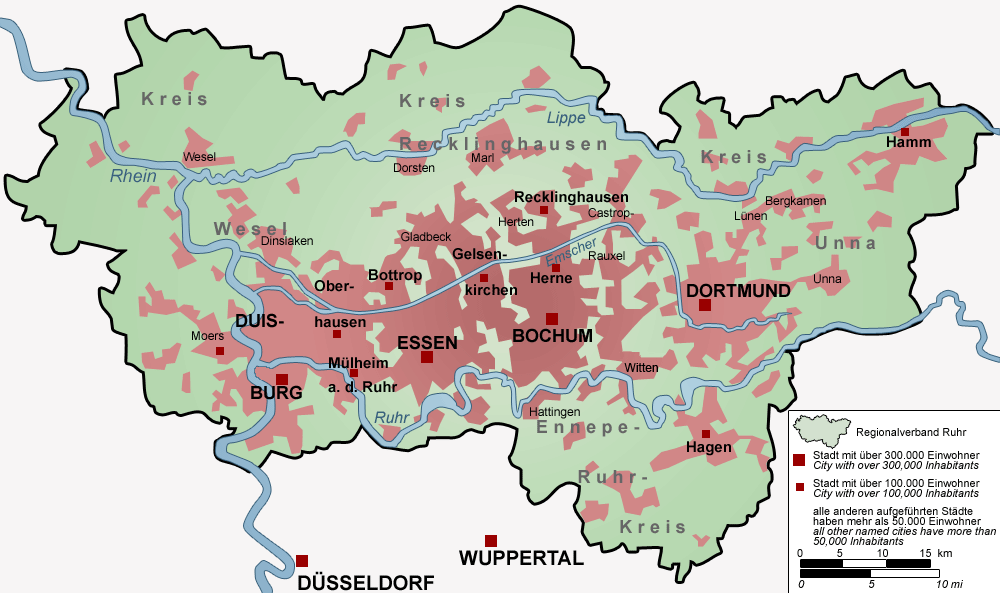
I sometimes get apprehensive reactions when I tell people that I’m from the Ruhr Area of Germany in North Rhine-Westphalia, known locally as the Ruhrgebiet. It seems that some people have an outdated image of the Ruhr Area as a sad, industrial zone dominated by chimneys, factories, and coal mines.

Well, I'm here to tell you that growing up in Essen wasn’t so bad after all, and to share a little bit about where I come from, I did some research using Google Book Search. Parks and playgrounds were within walking distance from my house (and my mom kept me away from the closed coal mines). I got to experience some of the great outdoors – even cows and other farm animals!

Marked by its industrial history – Krupp and Thyssen were among its founding fathers – the Ruhrgebiet has seen significant structural changes since the 1960s. The coal crisis of 1958 caused a dramatic decrease in coal demands, which lead to soaring unemployment rates. This forced cities of the Ruhr Area such as Essen, Dortmund, Duisburg, and Oberhausen to redefine themselves.

Industrial spaces were gradually transformed into more beautiful – even historical – sites. The renovation of a former Thyssen building as one of Europe’s largest shopping centers had an immediate, personal effect on my life, as I found my first jobs in the “CentrO Oberhausen.” Nowadays, the so-called Route of Industrial Culture links these rejuvenated locations, like the “Zeche Zollverein” World Heritage Site in Essen, and the large complex of former steel mills at Landschaftspark Duisburg-Nord in Duisburg.

The Ruhr Area now houses numerous theatres, museums, and concert auditoria. There are annual cultural events such as Essen’s “Grillo-Theater,” Oberhausen’s Short Film Festival, and the Moers Jazz Festival. I had one of my earliest encounters with art courtesy of a major Van Gogh exhibition on display at Essen’s Folkwang Museum.

The area’s cultural diversity will find wider recognition when Essen, representing the entire Ruhr Area, is named “European Capital of Culture 2010.” As writer Adolf Muschg puts it: “The new Ruhr District is no longer inhaling dust, but rather the future.” It’s a future that I can't wait to explore – and I hope I've whetted your appetite for it, too. Read the full post 0 comments

Share:

Happy New Year from the Google Book Search Team!

Thursday, December 27, 2007 at 3:31 PM


As 2007 comes to an end, we've been pulling together information about the New Year’s Eve traditions in Germany, Italy, Spain and France. We hope that wherever you are, you'll join us in celebrating the New Year!

Glückliches Neues Jahr!

A pot of cold water, a burning candle, a spoon and some lead – these are the essential items for a typical New Year’s Eve in Germany. The melted lead is dropped into cold water, and the patterns that emerge are used to divine possible events in the New Year – a ring might bring an engagement or wedding; a ship announces travelling.

Once they’ve sorted their future out, German families can relax watching "Dinner for One," a comedy sketch broadcast throughout the day. Although it’s not directly connected to New Year’s Eve, the sketch is immensely popular among German viewers and a "must" for a successful New Year’s Eve. Finally, at midnight, it’s time to say farewell to the old year and welcome the New Year with a glass of champagne and a "Berliner Pfannkuchen."

Buon Anno!

Italians celebrate the arrival of the New Year through the "Veglione di Capodanno," a dinner celebration followed by fireworks, concerts in piazzas and dances.

Dinners on the 31st vary according to regions and customs. However, there is one plate that remains the same on all Italian tables: lentils with cotechino. I have to admit that Cotechino, a spicy pork sausage from the Lombardy region, is not my favorite! However, as the lentils on the plate represent wealth for the New Year, no one would dare to curse their future by turning down this delicacy.

¡Feliz Año Nuevo!

If you plan to celebrate the holidays in Spain, don’t forget your grapes for New Year’s Eve, known locally as Nochevieja. Year after year, Spanish people get ready to gobble up 12 grapes, one for each stroke of the clock at midnight, to begin a new year. You can even make a wish for every grape you eat!

Many families gather in the main squares of their cities, or at home around the TV watching the famous clock in Puerta del Sol, while enjoying some of the many festive dishes and champagne. Fireworks and parties last through the night, and after all the celebrations are over, most people start the New Year by eating the famous "churros" -- strips of fried dough that you can dip in hot chocolate. This is the best breakfast in the whole of Spain after a long night out to celebrate 2008.

Bonne Fêtes de Fin d’Année!

Like in other countries, celebration is a part of our lives in France. However, I wonder if we go even more overboard than other countries. Réveillon, or New Year’s Eve, usually begins with seafood as a starter, followed by fish or meat as the main dish, and ends with fabulous desserts. In Provence, the region where I’m originally from, the custom is to eat 13 desserts! The subtlest one out of all these is generally calissons, a marzipan-based fruity treat from Aix en Provence. Nowadays, the 13 desserts are primarily a symbol of family reunion, with each guest participating in making at least one of them. It's also common to share the pastries or desserts you prepare with your neighbours, making it a very special event.

Whether you already have your plans set for the end of the year, or you want to try any of these tasty and colorful variations on the theme, the Book Search team wishes you a very Happy New Year. We’ll see you in 2008! Read the full post 0 comments

Share:

Columbia University joins the Google Book Search Library Project

Thursday, December 13, 2007 at 11:48 AM


Many moons ago, when I was a graduate student at Columbia University's School of International and Public Affairs (SIPA), I spent more hours than I care to remember in many of the university's two-dozen libraries, where I checked out books on subjects ranging from finance and accounting to globalization and privatization. Over my years at SIPA, I must've carried close to a ton of books between West 118th Street and my home off of Morningside Park. My time at Columbia was one part mind-expanding and one part back-breaking.

Now, years later, I work here at Google on a variety of exciting projects, including Google Book Search. Today, I'm pleased to announce that Columbia University has become the 28th library to join with Google Book Search to digitize works from its collections, and make them searchable and discoverable online. These public-domain works will be available to view and download for anyone with an internet connection.

This is great news for readers everywhere, who will now be able to view Columbia's amazing collections of books on architecture, political science, international studies, Asian languages and more. In practice, this means that a high-school student in Mendocino, California or Mendoza, Argentina will now have access to the same materials as the Columbia student in Morningside Heights. It also makes pulling these gems off the shelf a considerably lighter load to carry. Read the full post 0 comments

Share:

Go, go Book Search gadgets

Tuesday, December 11, 2007 at 11:26 AM


I like to think that I have the best job at Google Book Search. As a product manager focusing on the exposure and exploration of the Book Search index, I get to work every day on initiatives to help people discover books they love. Recently we launched the first of these initiatives on iGoogle, introducing the Google Book of the Day gadget (beta) and three other new Google Search gadgets: Books, Scholar, and Patents.


Add this gadget to your iGoogle page


Add this gadget to your iGoogle page


Add this gadget to your iGoogle page


Add this gadget to your iGoogle page


We hope having these gadgets on your homepage will help you get answers to your questions faster, as well as inspire you to explore and discover new books you love. Enjoy. Read the full post 0 comments

Share:

A new twist on Thanksgiving

Wednesday, November 21, 2007 at 2:26 PM


Have you ever thought that, for those of us who weren't born in America, Thanksgiving could seem like a strange holiday? Not so much in terms of remembering the past and giving thanks (who wouldn’t appreciate having a day off for that reason?), but rather the specifics of how it's celebrated. Consider the components of the classic feast. You’ve got cranberry jelly - a dessert for most of the world - eaten with turkey. This bird is cooked with a concoction of celery and bread inside it. And let’s not forget a pie made out of pumpkin -- obviously intended to be consumed as a savory vegetable, if at all!

It was all more than enough to overwhelm me when I was invited to my first Thanksgiving meal in the United States a few years ago. Ambivalent about embracing the tradition, I initially tried to resist the holiday and its odd symbols altogether...until I realized that Thanksgiving could actually be unconventional and fun, if you give it your own twist. So this past weekend, my friends and I decided to celebrate an unofficial, nontraditional form of pre-Thanksgiving -- the kind you don’t have when your parents are in charge.

We had the most delicious feast, including mashed potatoes with roasted garlic herb butter (if you're interested in spicing up your potatoes, you might like this wonderful book dedicated entirely to potatoes), home-smoked turkey, and lots and lots of pies. I broke down and made a pumpkin pie for my traditionalist friends, but along with that came an apple pie and an almond pear tart.

As the culmination of our long day of cooking (that turkey took us 8 hours to smoke!) and eating, we played video games: Dance Dance Revolution, followed by Wii Sports -- just the thing to shake off our post-meal stupor. It was great, so I hope this new experiment won't make my friends averse to the real Thanksgiving (after all, some of them actually like stuffing and cranberry sauce!).

There are a million different ways that people can reinterpet Thankgiving. After all, few of us roast turkey on a spit like they did in the good old days. You might use a 2-hour speed-cooking method for preparing your turkey, or dress your boiled yams with butter and fancy spices. Times may change, but I'm glad that this holiday of giving thanks is still around to remind us -- in a delicious form -- of what we can be thankful for. I, for one, can thank Thanksgiving itself for my newest hobby: making pies. Read the full post 0 comments

Share:

Finding your muse with Google Book Search

Wednesday, November 14, 2007 at 12:28 PM


If you’ve ever slogged through a boring novel and thought, “Hey, I could write something better than that,” now’s your chance. November is National Novel Writing Month, and while writing a whole novel in 30 days can seem pretty scary, you can get some help from NanoWriMo and Google Book Search.

NaNoWriMo is a writing program dedicated to “everyone who has thought fleetingly about writing a novel but has been scared away by the time and effort involved.” During November, the program encourages fledgling writers all over the world to take the plunge and write 50,000 words by midnight on November 30th. If you succeed in completing your novel, you’ll be gloriously inducted into the Winner’s Page and finally be able to dub yourself a novelist.

The idea is to compel yourself to write freely and profusely, without feeling the pressure of having to write something “good.” If you’re nervous about jumping right in, there are a number of books you can find through Book Search that can help you get started. Even if you have no plot, no characters, no theme – it’s No Problem!

You can take inspiration from this guide to writing novels, written by James N. Frey (not the James Frey of A Million Little Pieces). I also managed to dig up a novel-writing guide from 1901, written in a particularly charming style. Frank McCourt’s well-loved memoir, Angela’s Ashes, is another title that might spark your literary instincts. Remember - it’s all about having fun, taking risks, and getting the words out of your brain and onto the page! Read the full post 0 comments

Share:

Around the world in 80 pages (give or take a few)

Monday, November 12, 2007 at 9:11 AM


I usually don't think of winter as a good time to travel, given that it’s snowy or rainy in many areas (Mountain View included!). So I was surprised to find out that many of my friends are going on trips in the next two months. Some of these trips are home to visit family for the holidays, but some are to far-away locales like Japan, England, Ireland and Russia.

My own recent trip to Germany for the Frankfurt Book Fair showed me that traveling to a foreign country where you don’t speak a word of the language can require some major preparation! Walking through the stalls and checking out travel guides from publishers like Penguin, Insight Guides and Lonely Planet, I noticed that each guide seemed to cover something the others hadn’t. It struck me that browsing a whole range of guides is a great way to start getting to know a country.

My next vacation is in St. Petersburg, Russia, so after I got back from Germany, I decided to check out a bunch of guides to the city using Book Search. I already have a guide from Insight Guides, so I looked at the other offerings, like this Lonely Planet guide, which has a nice overview of the city’s history, culture, and popular activities, and this Frommers guide, which has more practical information about getting around the city. (Thanks to the "Places mentioned in this book" feature, I was also able to see interactive Google Maps with markers for each city mentioned in these guides!)

In addition to current guides, I found an unexpected public domain gem: Through Russia – a book of travel notes published in 1874. I imagine that the St. Petersburg of today is much different from the one depicted in the book. Certainly, things like fashion and modes of transportation will have changed radically, but what about less tangible things, like the culture? I'm planning to see if my impressions jibe with those of author Katharine Blanche Guthrie.

If you're going on a trip, I recommend giving Book Search a try. Even if you have only a short stay and limited time to absorb the culture, books can give you great insight into the way people do things. You might even find yourself responding to such phenomena as Russian morzh swimmers and Japanese Noh theater with an inner smile, thinking, “Ahh -- I get it!” Read the full post 0 comments

Share:

Books for the spooky season

Wednesday, October 31, 2007 at 9:52 AM


It’s the last day of October, which means that here in America, it’s time to celebrate Halloween (although we’re not the only country joining the fun!). I have fond childhood memories of dressing up as a chef, an Anchisaurus, and Andrés Galarraga, and making it my personal mission to grab as much candy as I could fit in a large grocery bag. That's a very modern way to celebrate Halloween, though, and not many people think about exactly how this spookiest of holidays came to be.

So I did a little digging in Book Search and discovered Halloween: From Pagan Ritual to Party Night. It's full of lively anecdotes illustrating how Halloween has changed over the years, from its beginnings as the Celtic feast of Samhain to its eventual popularization on distant shores. Evidently, the turn of the century was a heyday for elaborate Halloween hijinks -- at Northwestern University students "went on painting sprees of campus property and downtown stores," and in 1907, 31 of them were arrested for "hosing down divinity students in their dormitory."

You can find plenty of other good reads, too. If you're looking for books for younger readers, you might want to check out Witches, Pumpkins, and Grinning Ghosts: The Story of the Halloween Symbols. And little ones might enjoy this beautifully illustrated children’s book on the history of Halloween.

The fun doesn't stop there. November 1st marks the beginning of the Day of the Dead, or Día de los muertos, a Mexican celebration of life and death. For many of us, Halloween celebrations don’t go much beyond costumes and candy, but Día de los muertos is a time to reflect on those who are no longer with us. Yet the holiday is far from gloomy – it’s marked by brightly colored ofrendas, or offerings to the dead, lots of candles, pictures, and special food and drink. The most common flavor isn’t bitter but sweet -- people enjoy eveything from skulls made of sugar to the famous pan de muerto (loosely, “bread of the dead”), a twisted bread made from sugary dough.

If you'd like to learn more about Día de los muertos, I recommend checking out Skulls to the Living, Bread to the Dead (or for beginning readers, the colorful Day of the Dead).

Of course, the best way to experience Día de los muertos is to join a public celebration -- just by walking around, you can really get into the spirit of it (so to speak). Just be sure to take good care of your teeth; after two holidays filled with countless opportunities to indulge in sugary treats, they're going to need it! Read the full post 0 comments

Share:

Going clubbing with Book Search

Wednesday, October 24, 2007 at 9:17 AM


Ever thought about starting up a book club with your friends? Now's a good time -- October is National Book Group Month, and Book Search can help you get started.

You could begin by taking a look at books on the history of book clubs, how reading groups work, or recommendations from other book clubs -- or if you're raring to go, dive right in and start building a library of books you’d like to read with your group. Let's say you're a science fiction fan. You can start browsing by genre, adding books that intrigue you by clicking “Add to my library.” And if you want to share a book you've already read, you could add it to your library, give it a rating or write a review, and then label it "Book Club." From there, all you need to do is send your book group an invitation to view your library.

One more idea that might inspire you: you could try kicking off your book club with an outing to the newly released film version of The Jane Austen Book Club. Based on the bestselling book by Karen Joy Fowler, the movie is about five women and one lucky gentleman whose stories are revealed through book club discussions Austen's novels -- great books like Sense and Sensibility, Mansfield Park, Northanger Abbey, Pride and Prejudice, and Persuasion. Check them out! Read the full post 0 comments

Share: